
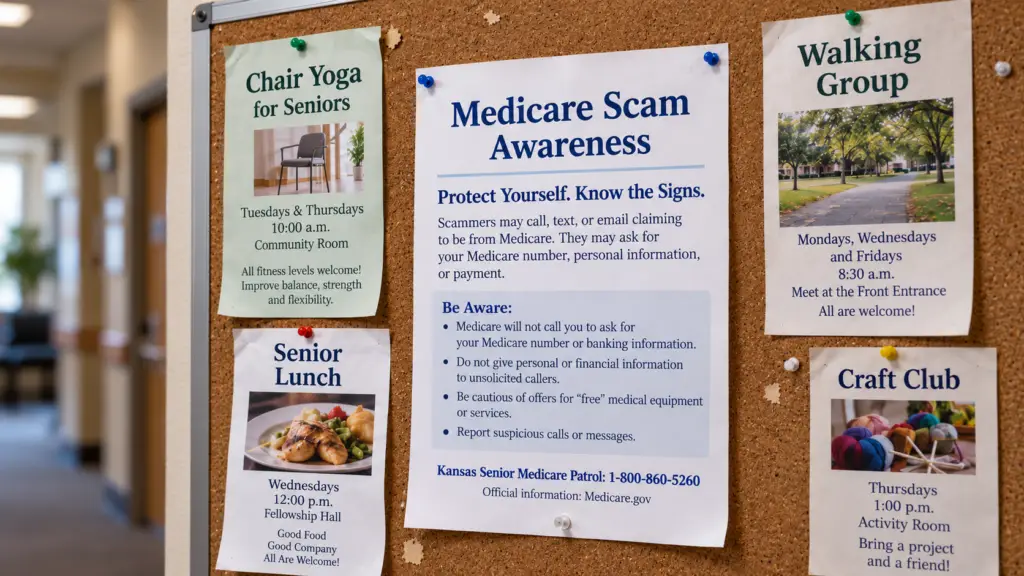
7 Medicare Scams Kansas Seniors Should Watch for During 2027 Open Enrollment
Medicare Open Enrollment begins October 15, 2026. Before reviewing your 2027 coverage, learn how to recognize suspicious calls, misleading websites, and requests for personal information.
Medicare Open Enrollment begins October 15, 2026. Before reviewing your 2027 coverage, learn how to recognize suspicious calls, misleading websites, and requests for personal information. A phone call claims your Medicare card needs updating. A text promises extra benefits. An online advertisement looks like an official government website.
Would you know which ones to trust?
For Kansas seniors and families helping older relatives, Medicare Open Enrollment is an important opportunity to review coverage. It is also a good time to stay alert for scams involving personal information, misleading insurance offers, and fraudulent medical claims. Medicare Open Enrollment runs from October 15 through December 7, 2026. Changes made during this period generally take effect January 1, 2027, depending on the type of coverage and change.
The Federal Trade Commission (FTC) warns that scammers and dishonest businesses may use misleading online advertisements, look-alike websites, and confusing health insurance offers during enrollment season. Knowing the warning signs can help you protect your information and make informed coverage decisions.
Here are seven Medicare scam warning signs Kansas seniors should know.
1. An Unexpected Caller Asks for Your Medicare Number
Be cautious when an unfamiliar caller claims to represent Medicare and asks for your Medicare number, Social Security number, banking details, or other sensitive information. Medicare will not call you unexpectedly to sell you something or ask for private information without a valid reason. There are limited circumstances in which Medicare or a plan representative may contact you, such as returning a call you initiated.
What to do: If a caller pressures you for personal information, hang up. Contact Medicare directly at 1-800-633-4227 (1-800-MEDICARE) to verify the situation. Even if the caller knows your name or address, do not assume the call is legitimate.
2. Someone Says You Must Pay for a New Medicare Card
A caller may claim your Medicare card is expiring, needs an immediate update, or must be replaced for a fee to keep your benefits. Treat these claims with caution. Official Medicare cards are free, and you can request a replacement through your secure Medicare account or by contacting Medicare directly.
What to do: Do not pay an unexpected caller to activate, renew, or replace your Medicare card. Verify any claim through Medicare.gov or 1-800-MEDICARE.
3. You’re Pressured to Change Plans Immediately
Be wary of anyone who says you must switch plans right away or risk losing your Medicare benefits.
During Open Enrollment, eligible beneficiaries can review their options and make permitted changes by December 7. You should have time to understand a plan’s premiums, out-of-pocket costs, prescription drug coverage, and provider network before making a decision. Medicare plan representatives must follow rules against misleading statements and high-pressure enrollment tactics.
What to do: Take your time. Compare plans using Medicare.gov, verify important details, and never make a decision because someone threatens you or pressures you to act immediately. A caller’s deadline is not necessarily Medicare’s deadline.
4. A Website Looks Official but Isn’t Medicare.gov
Medicare scams can begin with a search engine, social media advertisement, text message, or email.
The FTC has warned that misleading advertisements and look-alike websites may resemble official government resources. Some sites use similar web addresses, official-looking logos, or prominent search placement to gain your trust. Before entering personal information, check the complete website address. Be especially cautious of sponsored search results and unexpected enrollment links.
What to do: Type Medicare.gov directly into your browser when looking for official Medicare information. Do not rely on a logo, advertisement, or professional-looking design as proof that a website is legitimate.
5. Someone Offers Free Medical Equipment in Exchange for Your Information
An unsolicited offer for a free back brace, medical supplies, or other equipment may be a warning sign if the person asks for your Medicare number or pressures you to accept items you did not request. Fraudsters may misuse personal information to submit claims for equipment or healthcare services that were never authorized or received.
What to do: Only share your Medicare information with trusted healthcare providers, your health plan, or other legitimate parties who need it for an appropriate purpose. Be cautious of unsolicited offers that promise free equipment or benefits in exchange for sensitive information. If equipment arrives that you did not order, contact your healthcare provider or plan to investigate.
6. Your Caller ID Says “Medicare”
A familiar name or phone number appearing on your screen does not prove that a call is genuine. Scammers can manipulate caller ID information to make a call appear to come from a trusted organization. If someone claims to represent Medicare and threatens to cancel your coverage unless you provide personal information or money, treat it as a serious warning sign.
What to do: End the call and contact Medicare using the official number, 1-800-633-4227. Do not call back using a number supplied by a suspicious caller or rely solely on the number displayed on your screen.
7. Your Medicare Statement Shows Charges You Don’t Recognize
Not every Medicare scam begins with a suspicious phone call. Sometimes, the first warning sign appears on a Medicare Summary Notice, an Explanation of Benefits, or another insurance statement. Look for unfamiliar providers, medical equipment you never received, duplicate charges, or services you do not remember using.
An unfamiliar charge does not automatically mean fraud. Billing mistakes and misunderstandings can happen, so it is important to investigate before drawing conclusions.
What to do: Compare the statement with your appointments and receipts. Contact the provider or health plan to ask about the charge. If your concern remains unresolved, report suspected Medicare fraud to 1-800-MEDICARE or through the official Medicare website.
What Should Kansas Seniors Do If They Suspect a Medicare Scam?
If someone contacts you suspiciously or you believe your Medicare information has been misused, take these steps:
1. Stop communicating with the suspicious caller or website. Do not provide additional information or send money.
2. Contact Medicare. Call 1-800-633-4227 or visit Medicare.gov to report suspected Medicare fraud.
3. Report the scam to the FTC. Visit ReportFraud.ftc.gov.
4. Contact the Kansas Senior Medicare Patrol. Call 1-800-860-5260 for help recognizing and reporting potential Medicare fraud, errors, and abuse.
5. Take steps to protect your identity. If you shared sensitive information or suspect identity theft, visit IdentityTheft.gov for guidance.
Kansas residents can also contact Senior Health Insurance Counseling for Kansas (SHICK) at 1-800-860-5260 for free, confidential Medicare counseling. SHICK counselors can help explain Medicare options and answer coverage questions. They do not work for an insurance company.
Review Your Medicare Coverage With Confidence
Before October 15, consider sharing these warning signs with a parent, grandparent, neighbor, or friend who uses Medicare. A short conversation about suspicious calls, personal information, and trusted websites could help someone avoid a costly mistake.
At Synergy Insurance, we encourage Kansas residents to take their time, verify information, and understand their coverage choices before making decisions. If you have questions about Medicare coverage options, our team can help you review available choices and understand what to compare, without unnecessary pressure.
Have questions about your Medicare coverage for 2027? Call us at (620) 200-6178 to speak with our team and review your options. Save this guide or share it with someone reviewing Medicare coverage for 2027.